2026
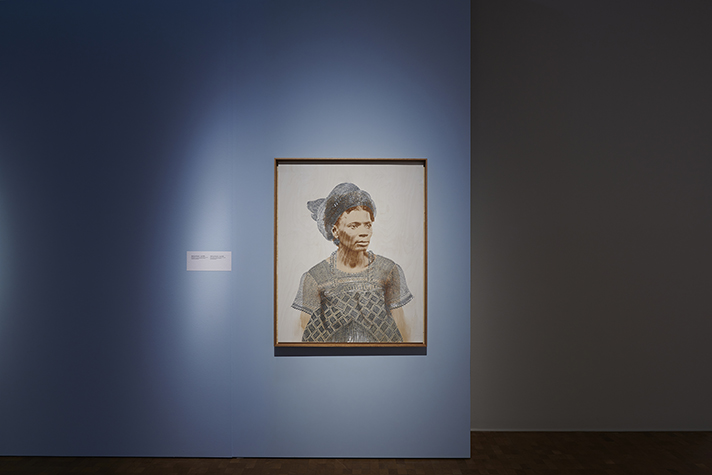
This portrait expands on the Tailoring Freedom series with one of the 200 photographs of mostly enslaved Africans and Afro‑Brazilians in Rio de Janeiro and mixed‑race people made in Manaus, also commissioned by the Swiss scientist and racist Louis Agassiz (1807–1873), this time by the Italian photographer Augusto Stahl in Brazil during the Thayer expedition that he led from 1865–66. This racist photography collection was named Pure Race Collection and Mixed Race Collection housed at the Peabody Museum of Archaeology and Ethnology – Harvard University.
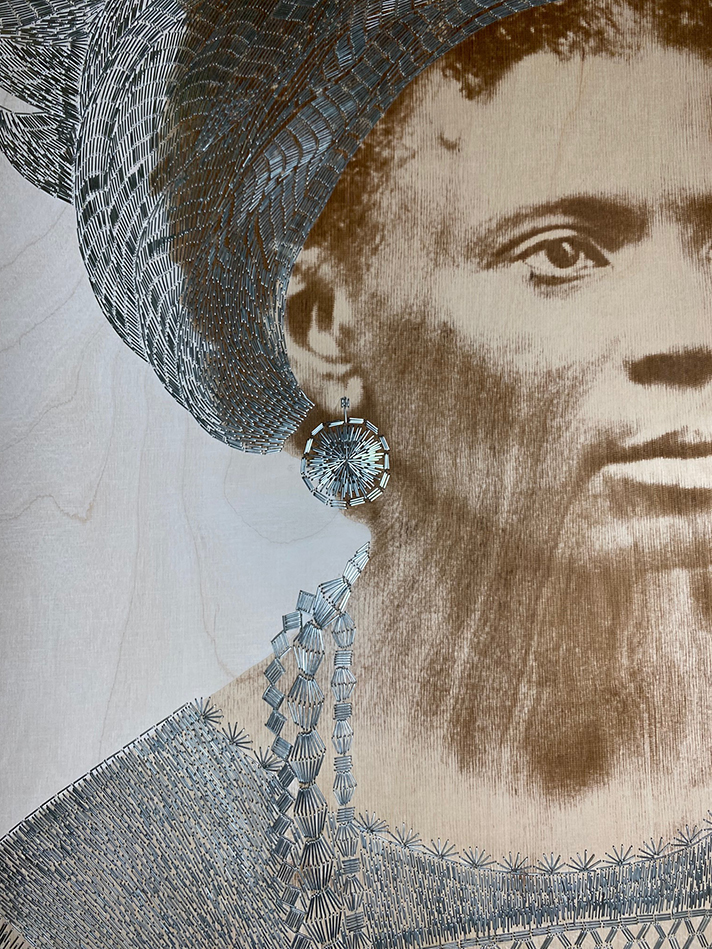
We don’t know much about the woman in the photograph, unfortunately. Records state that she was from the present‑day Ghana. She, too, was originally photographed without clothing at Agassiz’s order to extend the earlier collection made in 1850. Her dress that I made for her relates to the Brazilian context. While researching I learned about the history of the formerly enslaved and later self‑emancipated Candomblé priestess originally from Nigeria, Iyá Nassô. She helped found the first Candomblé temple in Salvador, Bahia, Brazil and later returned to the continent. The stapled dress is inspired by garments associated with her.
The first time I saw a selection of this Brazilian photographic collection was in 2010 when I co‑edited the book (T)races of Louis Agassiz: Photography, Body and Science, Yesterday and Today with Professor Maria Helena Machado from the University of São Paulo on the occasion of the 29th São Paulo Biennial. It is available from Capacete Entretenimentos.
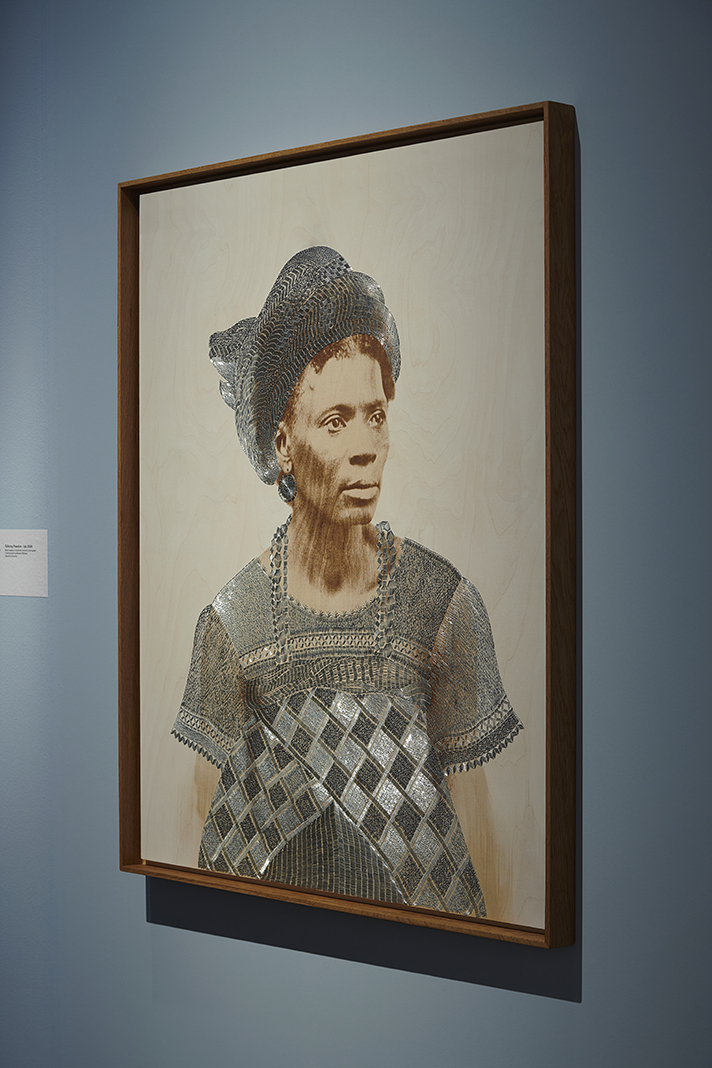
Sasha Huber, Tailoring Freedom - Iya, metal staples on fire engraved wood, 120 cm x 97 cm, 2026. Louis Agassiz Photographic Collection, Pure Race Series, identified as Bono. Photographer: Augusto Stahl, Rio de Janeiro, 1865. Original courtesy Peabody Museum of Archaeology and Ethnology, Harvard University (2004.1.436.1.78).Â
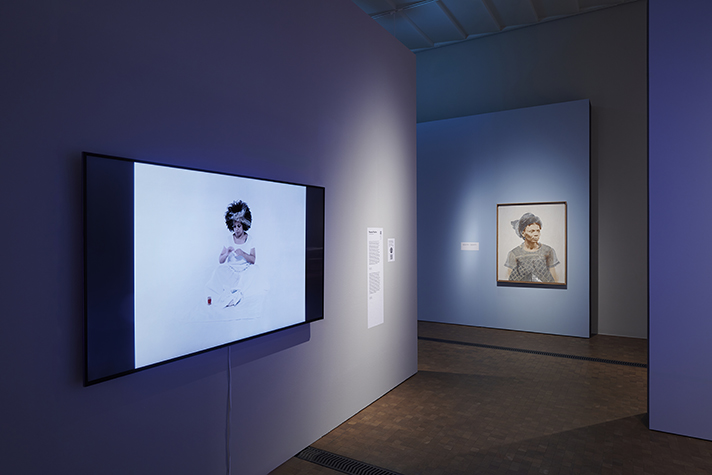
Photo: Installation view A Kind of Paradise - Colonial-Era Photography in Contemporary Art, (C) Museum Rietberg, Patrik Fuchs